To others, you’re doing just fine. You seem stable enough.
You work, you make money, you train, you date, maybe you travel a bit. But somewhere along the way, you realise life still bothers you. Two steps forward, three steps back. What is it?
Cycles that keep repeating. Habits that pull you back in. A body that keeps reminding you of its limits. Relationships that seem to never change, a different woman, the same bullshit. Is it you?
Is it her?
Your ship just ain’t holding course.
Why is that? That’s what we’re here to find out.
Any of this familiar?
The usual suspects
✧
In your head.
You overthink, you second guess yourself. Can’t commit.
There’s more behind it+
You have no compass that’s guiding you to your purpose.
You’re paralysed by which path to take.
You’re terrified of running out of distractions. Scrolling, gaming, jacking off to goth mommies.
You take life too damn seriously. There’s no charm left in it. I’ve been there.
Your only comfort? No one else can see the drama going on in your head.
In your body.
“But my hip, my back, my shoulder...” I gotchu amigo
There’s more behind it+
You’re a jack of all workouts, master of none.
You don’t see results, there’s so much conflicting advice, you don’t know what to believe.
You overeat, then undereat. All the while, you haven’t shat in four days.
You feel weak, frail and breakable. You fret that other men can easily take you down.
Are your injuries excuses? Or have you just never learnt anything from them?
With women.
You unconsciously go for women that don’t suit you, then complain.
There’s more behind it+
You can’t fully relax in bed. You finish too quickly or you can’t get hard at all. Ain’t your fault mochacho...
Somehow, you’re always doing something wrong with women.
Women control your life. When they’re in it, when they leave, even when they ghost you.
You dress like a bedraggled schmuck and wear Crocs to a party.
This category might be the toughest pill for a man to swallow and the hardest one to change. So buckle up, sugar bear.
✧
More routines. More training. More advice. More women. More work.
Maybe some of it helped for a while. But you always end up asking the same questions:
Your body is a cybernetic system, a system of systems forming an intricate interconnected web of elements that dance together elegantly through feedback loops. I treat it as such.
Your nervous system speaks through your breath. Your breath influences your bones. Your bones form your posture. Your posture mirrors how you feel.
Your sleep, gut, energy and mood are all in conversation. I’ve spent years training to look for those connections. To broaden my sight to understand who’s in front of me and search for the cause rather than fixate on the symptom. Let’s find the patterns that matter together. We’re going deep!
Where we start
The Cybernetic Wheel
First we make our habits, then our habits make us.
Your body
Your daily rhythms
Your life context
Pick a layer, then tap a circle or segment to explore it
What we track
Energy · Appetite · Sleep quality · Digestion · Recovery
Gold number & dots: how many sub-systems we explore inside that body area. Tap a circle to see them.
Hover to trace a pathway. Select a body area or ring segment to explore it.
What we track
Notice patterns across days: what you did, how you felt and what changed.
Explore the body in more detail
Systems explored
Sub-systems within
Digestion
Gastric function; GI inflammation; Small intestine & pancreas; Colon
Liver & gallbladder
Hepatobiliary function
Endocrine
Thyroid; Adrenal
Blood sugar
Dysglycemia (low); Dysglycemia (elevated)
Heart & circulation
Heart; Circulation
Mood
Depression; Anxiety; Anger
Immune & airways
Eyes, ears, nose, throat & lungs
Kidneys & bladder
Kidney & bladder
Structure & movement
Bone integrity; Connective tissue; Muscle & nerves
The wheel moves from the body outward: twelve areas of physiology, eight daily rhythms and eight dimensions of your wider life context.
The arrows follow selected pathways between systems, mapping signalling, direction, exchange and feedback.
Five observations roll in another element: time. They clarify for us what repeats, what's stuck and what changes across the days we track.
A visual summary what of we'll be working on. Your body's internal systems & the life circling them. Select any element to explore its details.
Through a series of sequential questionnaires, we journey together from the broad to the remarkably specific, exploring your health, physiology, relationships, habits, cravings, environment and the way you actually live in your world.
For several days, we’ll have you log every meal and drink, your sleep patterns and what your training actually looks like. You’ll even log how many times you poop, and yes, the shape and consistency too.
This is serious shit… How am I meant to understand your health if we can’t talk shit?
We want to know who you are, nose to tail, Mochacho.
We’re building context so I can guide you holistically towards a better life.
This is not medical diagnosis. If something is outside my purview, I’ll say so. If I think you need a doctor, I’ll tell you. And if I don’t know something, I’ll tell you I don’t know.
Relationships
The biggest danger in life is not aiming high and failing, it’s aiming low and succeeding. So who are you going for Mochacho?
The Spine of a Relationship
Press to explore
1 Purpose
Purpose is the spine of a man, it’s what connects his inner reality to the outer universe. It’s your biggest love, highest value and dream. Your purpose will dictate everything beneath it. What you sacrifice, what you can give and what kind of relationship fits in the life you’re building. Purpose can reveal a lot about the sustainability of a relationship, if your values match, if your lives fit together and whether you’re actually moving in compatible directions. Without a sense of direction, it’s easy to be confused about why she’s in your life in the first place.
2 Container
Purpose dictates this. Who’s charting the course of the relationship? Are you steering its path? Or are you just allowing yourself to be taken by her current? Does she call you out in front of others and take jabs at you? Do you allow disrespect? Does she nag at you because you’re not getting your shit together? Or do you have to keep fathering her because she can’t get hers together? Who’s calling the shots there? And is it too lopsided?
3 Attraction
Do you approach? Do you need to be sauced before you can? Do you rely on dating apps? Do you shit yourself at the thought of talking to a woman? Attracting includes approaching woman and the quality of woman you allow into your life. How hard do you go on yourself when rejected? Afraid of seeming ‘creepy’? Do you keep letting chaotic women in because you think you can save them? Embarrassment is an unexplored emotion Mochacho, go embarrass yourself. Be an idiot, rejection is better than regret.
4 Giving
How do you communicate without losing connection? Do you give too much too early and freak her out? Do you put her on a pedestal so fast that you only widen the distance between you two? Are you generous in bed? Or are you stressing that you aren’t giving enough that you’re barely present anymore? Can you give freely and let her give you some lovin’ in return? You give with your words & your body.
5 Receiving
Do you yap about Bitcoin on a date? Or the nice guy who just sits there passively while she yaps away, then leaves because he’s ‘boring’. Same thing in bed. Are you star-fishing in bed? Or are you over-performing so hard you’ve forgotten how to receive anything? Receiving needs the subtlety of attention; if you wanna know what you need, then you need to ask the right questions. To yourself firstly, then her. Judge a man by his questions, rather than by his answers.
6 Truth
How honest are you with yourself? With her? What are your shortcomings? The sooner you find that out, the sooner you can stop your heart from turning into a weapon. because when it does, you’ll always end up using it on yourself. Do you lead with your shadows? Or do you pretend to be perfect because you think that’s what it takes to be loved? Do you turn a blind eye to her red flags and wait till it all turns to shit?
Which layer do you struggle with most?
Sexuality
You’re allowed to talk about this.
A lot of men carry parts of their sex lives quietly, anxiety, lust, performance, chasing, ghosting, porn, shame and seriousness.
All the things they want, worry about or never really know how to ask for.
I’m constantly surprised by how rarely men actually talk about their sex lives. Maybe nobody asks. Maybe they don’t know how. Maybe they’re ashamed to.
And when you do want to talk about it, who exactly do you go to?
This is a place to actually talk about it, amigo.
Seven elements: meaning, pleasure, communication, confidence, intimacy, play and function.
If erectile issues keep happening, sex is painful, or symptoms aren’t improving, I'd get a proper medical check if I were you. 1:1 Guidance works alongside medical care, not instead of it.
Some things can't be taught around the table, only on the table.
The Sex Table
AT THE CENTREYou two
Choose a circle. See what opens up.
◇
✧
Manhood
The only kingdom that makes any man a king in his life is the kingdom of his own soul.
Becoming a man is not a one time event; it is a decision you make each and every day. It is a decision to rebel against society’s low expectations for men.
Your Compass:Four elements we explore
1
One Love
The dream, the highest purpose, the thing worth changing for. Everything else on the compass points back to it. This is what drives you when life hits hard.
2
Two Forces
Yin & Yang. Ease and effort. Taking in and putting out. Most men are all gas, no brakes. Most men know how to push. Less know when to yield.
3
Three Choices
Optimal, suboptimal or nothing at all. You choose every day. Sometimes waiting is wise. Sometimes you’re avoiding a truth you already know.
4
Four Doctors
Happiness, Quiet, Diet and Movement. Four doctors you see every day. Which one needs your attention most?
Start with what you love. The rest follows.
Your Compass
Press to explore
◇
How we’ll work together
The Overview
01
Tell me where you’re at
We start with a Clarity Call to see if we’re a good fit. Friend to friend, I’ll probably crack a few jokes to soften the air. Tell me what’s going on, what you want to change and where you feel stuck. I’ll listen, ask questions and tell you honestly whether I think I can help.
02
We get to know you properly
If we decide to work together, we go deep. You’ll work through a series of questionnaires and real-life diaries covering your health, physiology, food, sleep, training, habits, relationships, sexuality, stress and the life around you. Everything baby!
We’re just building context, like I said before, nose to tail, Mochacho. Not one symptom. Not one bad habit. The whole thing!
03
We figure out what actually needs changing
Once we put the puzzle of your results together, the patterns start to show. Then we decide what matters most first. Maybe it’s how you eat. Maybe you’re training too hard and recovering like shit. Maybe your mornings are chaos. Maybe there’s a conversation you’ve been avoiding for six months.
Then we build something around you, your body, your life, your goals and what you can realistically sustain.
04
We work on it together
You’re not handed a PDF and sent into the fog.
We keep talking, checking what’s working, what isn’t and what life has thrown at you since we last spoke. We adjust your food, movement, routines, recovery, conversations, even how you breathe during sex; whatever we’re working on as things change.
Your life shifts. The plan shifts with it.
1:1 Guidance
Eight to twelve weeks.
Look, I’m deeply meticulous. God be my witness, I’ll go through every damn detail with you here, we ain’t skimming. No groups either.
We meet every week, adjust as we go and keep working until something real starts to shift. I want you getting the best bang for your buck Mochacho.
God helps them that help themselves.
Weekly conversationsVideo or in person. Long enough to dig in properly.
The deep intakeWe understand the whole picture before we start messing with anything.
Health & routine workSleep, food, hydration, digestion, training and recovery; shaped around your actual life.
Relationship guidanceListening, questions, patterns, choosing well, conflict and honesty.
Sexual confidenceWhere it’s relevant, we talk about it directly: porn, erections, ejaculation, anxiety, communication, whatever needs attention.
Between-session supportIf something comes up between calls, send it through. On Sunday too? No problem amigo, send it!
What men tend to walk away with
Depending on what your intake scores, diaries and graphs are telling us, we’ll see what needs attention first: better sleep, a solid routine, a more disciplined approach to food, steadier energy, less inflammation and a clearer head.
Better interactions with women. A sharper sense of who actually suits you as a man.
More comfort in your own damn skin, and in bed too. To be the bull that you are.
And this is the quintessence: getting out of your head and back into your body.
What’s guaranteed to us in this life except death? You’re a person, not an object. A lot of this comes down to your willingness to show up and do the work. But a hell of a lot can shift in twelve honest weeks.
You feel me?
In person
If you’re nearby, things get a lot more interesting. Full physical, postural and orthopaedic assessments, we’re talking hours of looking at how your body actually moves.
Then corrective movement, injury rehab, physiology-based breathwork and hands-on remedial treatment to help get you out of pain and moving properly again. No hippie dippy nonsense.
Available separately, wherever in the world you happen to catch me.
Pricing depends on what you need and where in the world you are. We’ll sort it out on the call.
Training history
Level 3Rehabilitation specialistCHEK Practitioner. Advanced training in postural assessment, movement analysis, corrective exercise and individual programme design.CHEK Institute · Eccleston, United Kingdom
HLC2CHEK Holistic Lifestyle, Level 2.Holistic lifestyle assessment and guidance across nutrition, sleep, stress, movement, recovery and daily habits.
200Clinical training in remedial massage, musculoskeletal assessment, treatment planning, pain science and supervised clinical practice.Sunshine Coast, Australia
2,000+hours of yoga teacher training.1,750 hours, Isha Foundation, India300 YTT teacher training, PeruAyurvedic wellness training, Sivananda Ashram, Kerala, India
01 / 13
Assess & rebuild
Reading your body
I measure before I guess.
I measure everything instead of eyeballing it.
Posture checked against a plumb line, head, ribs, pelvis and the curves of your spine.
Joint range measured properly with a goniometer.
Muscle length and tension tested so we know what’s actually tight and what’s compensating.
Health history, neurological checks and orthopaedic screening to spot anything that needs a closer look or a referral.
Assess & rebuild
Spinal function & training
Your spine is your axis.
How a spine is built, and how it gets overloaded: injury, repetition, and pain switching muscles off.
The eight most common spinal conditions, and how exercise is phased from rehab back to full training.
Trunk stabilisation, and how stiff hips and ankles change the way you squat.
Corrective exercise for spinal and core stability.
Assess & rebuild
Scientific Core training
The pressure and stability system that has to work with the rest of you.
The deep “inner unit” and the big “outer unit” muscles, and how they’re meant to share the work.
How abdominal pressure and fascia keep your spine stable under load.
Screening for the common ways a core stops doing its job.
Corrective work that carries from rehab through to performance.
Assess & rebuild
Hips, knees, ankles, feet
Everything between your hips and the ground.
The most common lower-limb sports injuries, and the principles of rebuilding after them.
How your legs tie into your core and pelvis, so we look at the whole chain.
Where leg power really comes from: fascial slings, spine and hips working together.
Return-to-function programming, from first steps back to full training.
Assess & rebuild
Scientific Stretching
Stretch what tests tight. Leave the rest alone.
Stretch assessments first, so the stretches you do are the ones you need.
Corrective stretches and mobilisations matched to what the tests show.
How hydration and fascia affect the way you move.
How stress and emotion show up as held tension in the body.
Train
Movement from the ground up
Going back to the basics of human biomechanics.
The seven primal patterns: squat, lunge, bend, push, pull, twist and gait.
The infant developmental sequence, from breathing to crawling to walking, and where yours has gaps.
Making any exercise easier or harder, to meet you where you are.
How movement patterns get learned, and relearned.
Train
Programmes built for one man
A highly unique program for you, built around your unique needs.
A needs analysis first: your body, your goals, your week.
Reps, sets, tempo and rest chosen for the result you actually want.
Training load matched to how much stress you’re already carrying.
Periodisation: a solid base first, then I get specific.
Train
Yoga, Tai Chi & Qi Gong
Classical hatha yoga and Ashtanga yoga.
Comprehensive yoga sequences, kriyas, meditations, Tai Chi and Qi Gong.
Ayurvedic wellness guidance and massage, trained in Kerala, India.
Breath, posture and attention as tools you can use every day.
Taught so you can practise on your own, without me in the room.
Live
Food that fits you
Nutrition based on your metabolic type.
Individualised eating, built on how your body responds instead of a generic plan.
What to eat and when, then fine-tuning meals across the day.
Food rotation, so variety is built in.
The usual roadblocks to changing how you eat, and ways around them.
Live
The six foundations
Sleep, water, food, thoughts, breath, movement.
The six foundations, and how each one adds to or takes from your stress.
Detailed questionnaires that map how much load your body is under, and where it’s coming from.
The Four Doctors: Dr Happiness, Dr Quiet, Dr Movement and Dr Diet.
Working in, gentle, energy-building movements for the days when training harder only adds to the stress.
Pain is real. It goes far deeper than “something’s broken”.
How the nervous system produces pain, and why chronic and acute pain behave differently.
The different types of pain, and the signs of a sensitised system.
How biology, psychology and life circumstances all feed into it.
Explained in plain language you can actually use.
Hands-on
Knowing my boundaries
If it’s not mine to handle, I’ll point you to who can.
Screening for red flags, and knowing when and how to refer on.
Working alongside doctors, physios and other health professionals.
First aid and CPR trained.
Infection control, health and safety, legal and ethical practice.
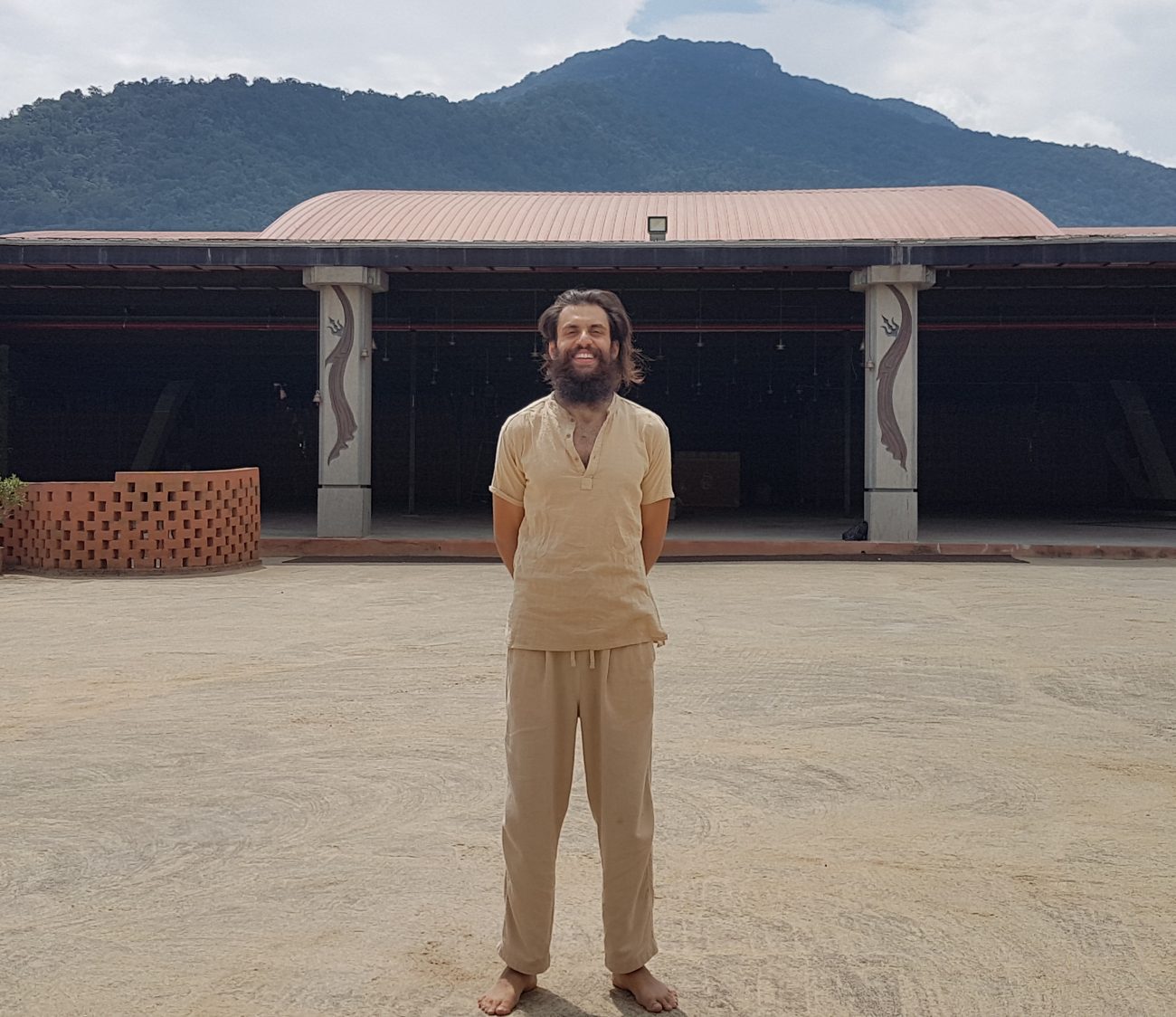
yup, me
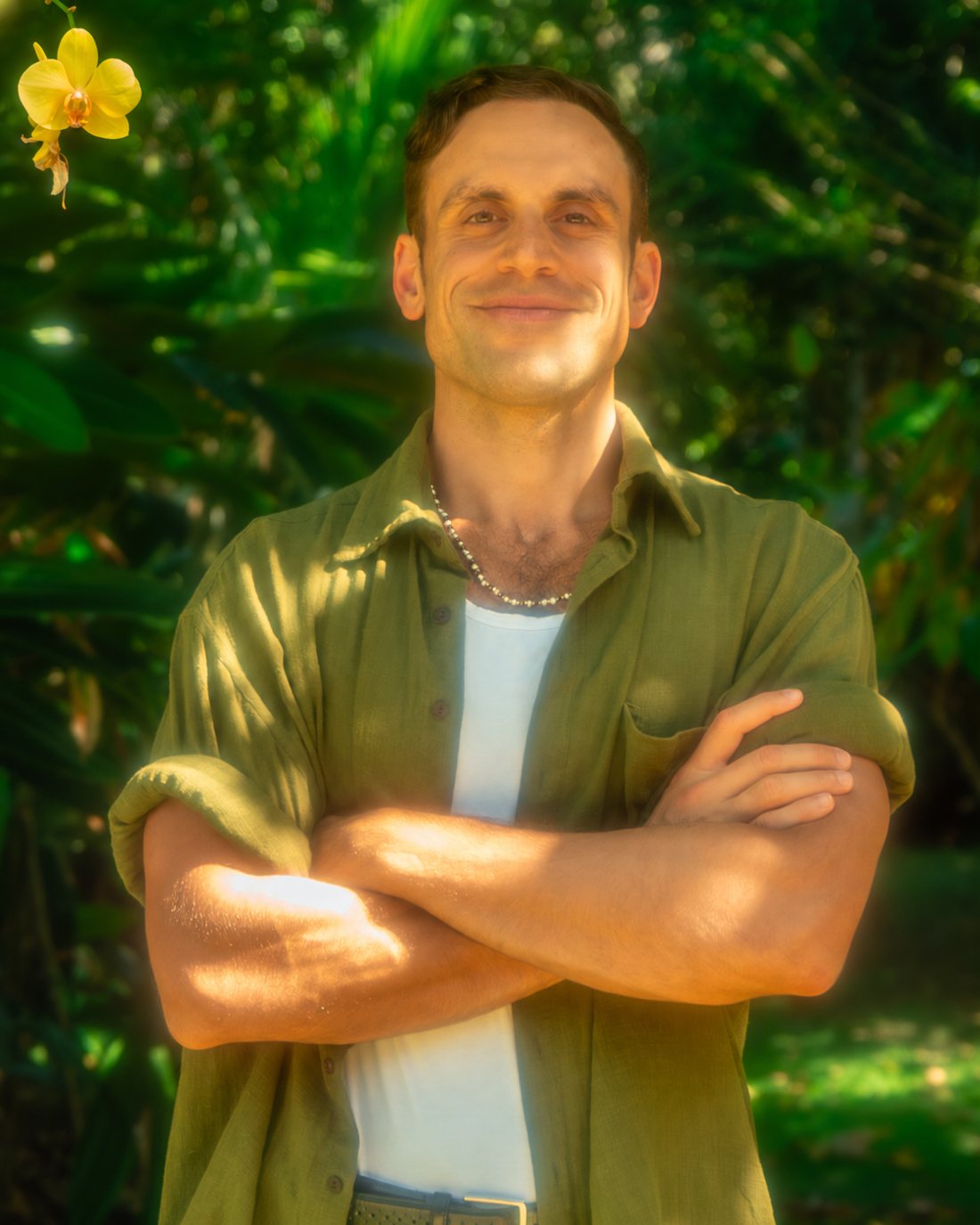
About Sid
When setting out on a journey, do not seek advice from those who have never left home.
I’ve spent fifteen years on the road, living in different corners of the world; Peru, Brazil, Central America, India, Australia, Europe and plenty of places in between.
And everywhere I went, I somehow ended up doing the same thing: forming a fellowship with some of the most solid dudes you’ll ever meet and going on adventures together. Scaling mountains. Hunting down waterfalls. Picking some random spot on the map and getting there no matter what.
I’ve never been very good at keeping things on the surface either. Somewhere between the hikes, long drives, grueling barefoot treks in the rain and kitchen tables, we ventured deep in conversation.
Mythology. Philosophy. Health. Purpose. Past partners. Shitty experiences. The best experiences. Comedy. Sex. Conspiracy theories. The things we were afraid of. The things we wanted out of life. And God, the story telling, damn.
I didn’t arrive at this work because life went smoothly for me.
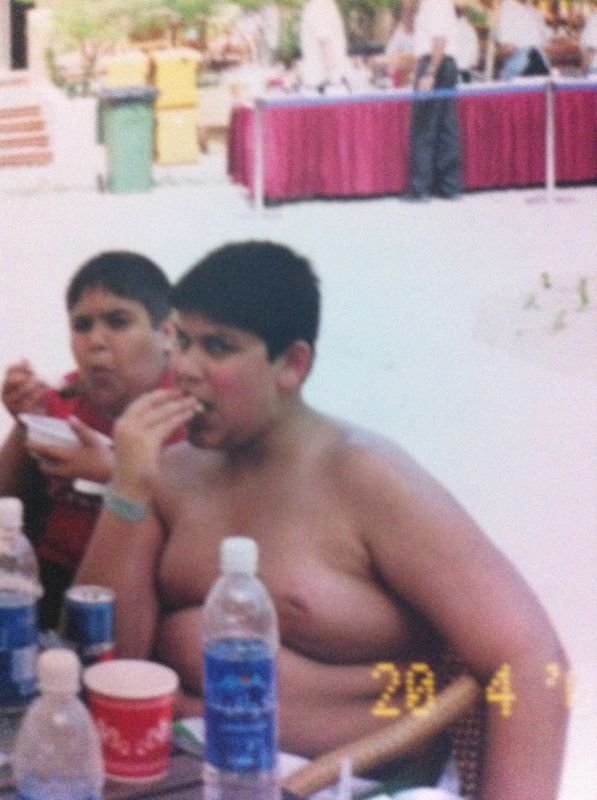
The pain teacher came knocking early. I trudged through depression, addiction, existential loss and heartbreak. At one point I was forty-five kilos heavier than I am now, ruthlessly stuffing my face until one kind of pain went quiet and another began.
God saved me and I pulled through. But such is life, you solve one set of problems and another comes rolling in.
More lessons.
I became a comedian and comedy was my medicine, I performed for thousands of people, and it was a genuine blessing to make people laugh and bring a little joy into their lives. I’ve tried to carry that into everything since. Life is sweeter when you can laugh at it. I’m pretty allergic to taking myself too seriously and that’s served me well.
Relationships held up mirrors to parts of myself I would rather not have seen. I made bad choices. Stayed too long. Left too late. Hurt people. Got hurt. Learned plenty the hard way.
I’ve pulled people out of situations where their lives were in imminent danger, and I’ve come close to losing mine a few times too. I believe a man learns something about his own mettle when he brushes up against death. You realize that the greatest danger for a man is loving life only while fearing death.
I tore through countless books on whatever piqued my curiosity, often going back and reading them twice. I spent years training with the CHEK Institute in health guidance, rehabilitation and corrective exercise. I spent hundreds of hours in clinics practicing remedial treatment. I lived in ashram after ashram and completed more than 2,000 hours of yoga training.
I studied breathwork from different scientific traditions and teachers, Ayurvedic bodywork, and spent a stupid amount of time trying to understand how the human body, mind and spirit dance together.
I think it’s silly to quantify a soul’s seeking for growth with hours and certificates. You realize at the end that the more you think you know, the less you actually know. And to know and not do is to not know.
The travelling. The fuck-ups. The hard conversations. The shame I had to face. The people I’ve met. The relationships I’ve had. The things I’ve had to drag myself through and understand firsthand.
That’s what taught me how to actually use what I’ve learned.
I’m not a doctor. I’m not a psychologist. I’m not a relationship therapist. And I’m not going to pretend I know something when I don’t.